Sustainability and Health for early childhood services
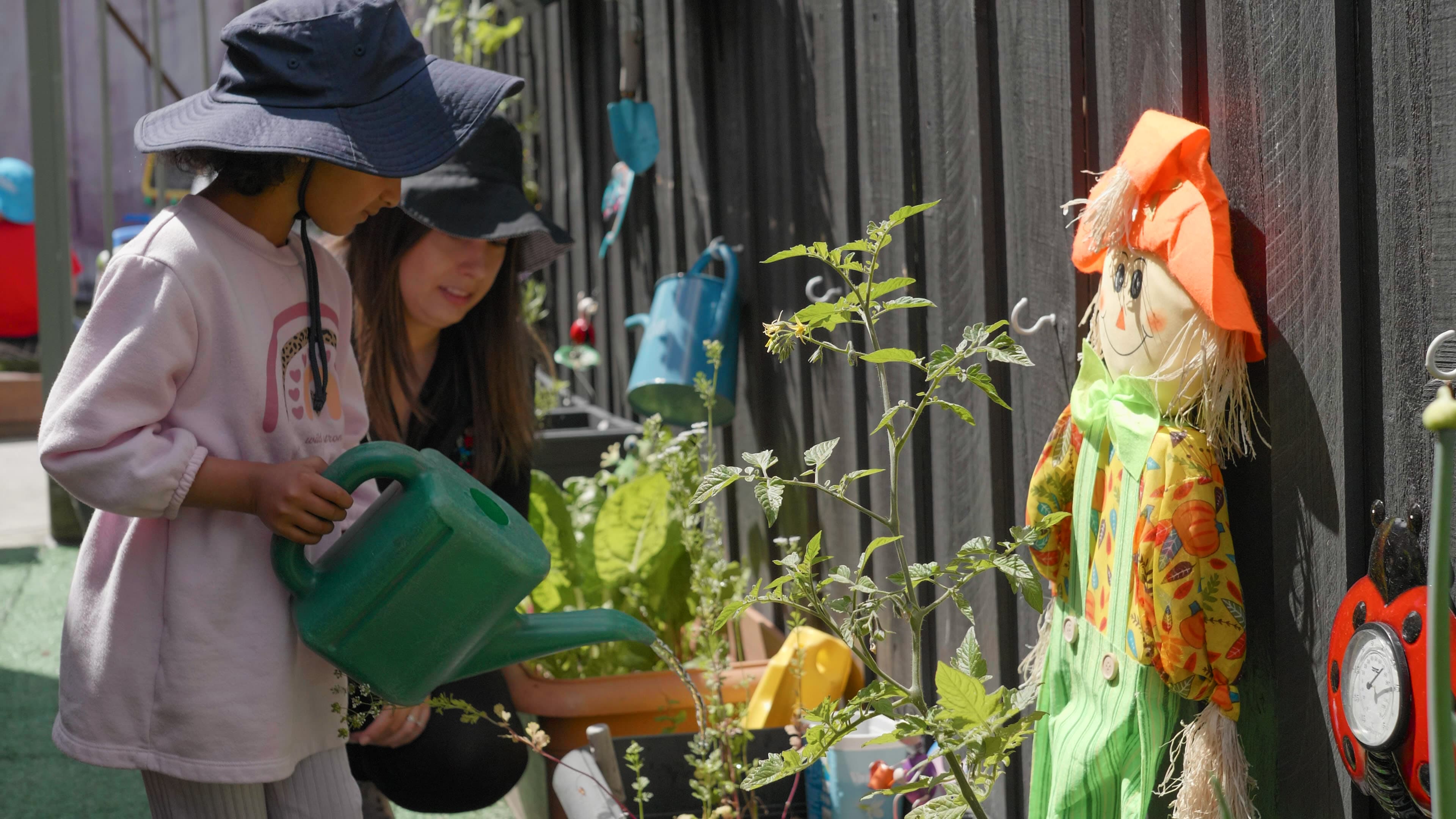
Promoting environmental sustainability in services supports children's physical, mental and social wellbeing today, while helping to build a healthier future for them and their communities.
This health and wellbeing priority focuses on actions that reduce environmental impact, many of which also support health and wellbeing, now and into the future. It also includes adapting to climate change and minimising its associated health impacts. Together, these actions strengthen the resilience of the whole service community.
This priority helps to bring together existing sustainability and health actions.
Sustainability and Health Action Table
This action table gives an example of how the Healthy Places Framework can be applied to Sustainability and Health in services.
Action area | Leadership and Commitment | Teaching & Learning | Physical Environment | Culture | Staff Wellbeing | Families & Communitiy Engagement |
|---|---|---|---|---|---|---|
Goal | There is strong leadership support and a shared commitment to a whole-service approach to sustainability and health. | Children learn how sustainability actions can support both the environment and their health and wellbeing. | The physical environment supports sustainability actions, including adapting to climate change. | The service fosters attitudes, behaviours and values that promote sustainability actions. | Staff have the resources and support they need to take sustainability actions that benefit their health and wellbeing and minimise effects of climate change. | The service engages, partners and collaborates with families and community organisations to support sustainability actions. |
Action | Communicate the service’s commitment to sustainability and health with the service community. Incorporate climate change adaptation in the service’s Emergency Management Plan by identifying local climate-related risks and outlining strategies to prevent harm and build resilience. | Provide a variety of developmentally appropriate learning experiences to demonstrate how sustainability actions can benefit health and wellbeing. Where applicable, incorporate child voice and agency in learning experiences that explore sustainability and health. | Manage the service’s built and natural spaces to minimise the effects of climate change and protect health and wellbeing. Use the service’s physical environment to create opportunities to connect with nature, fostering environmental awareness and stewardship while supporting mental health. | Encourage and champion sustainability actions including: • active travel • adapting to climate change • connecting to nature • eating more plants • reducing and recycling waste • using less energy. Celebrate and promote cultural practices that support sustainability. | Provide opportunities for staff to connect with the natural environment. Promote mental health and wellbeing support to those impacted by climate change, including natural disasters. | Provide opportunities for families to be involved in service sustainability activities. Assist families to access appropriate support services for those impacted by climate change, including natural disasters. |
Join today to see the full list of suggested actions, examples in practice and links to supporting programs and resources as outlined in the Sustainability and Health Whole-Service Action Guide.
The health and wellbeing priorities
The Healthy Places Framework helps early childhood services support all health and wellbeing priorities through a set of action guides. Six health and wellbeing priorities areas each have their own guide, and a flexible action guide is also available for any health area while still following the Framework.